 Connect


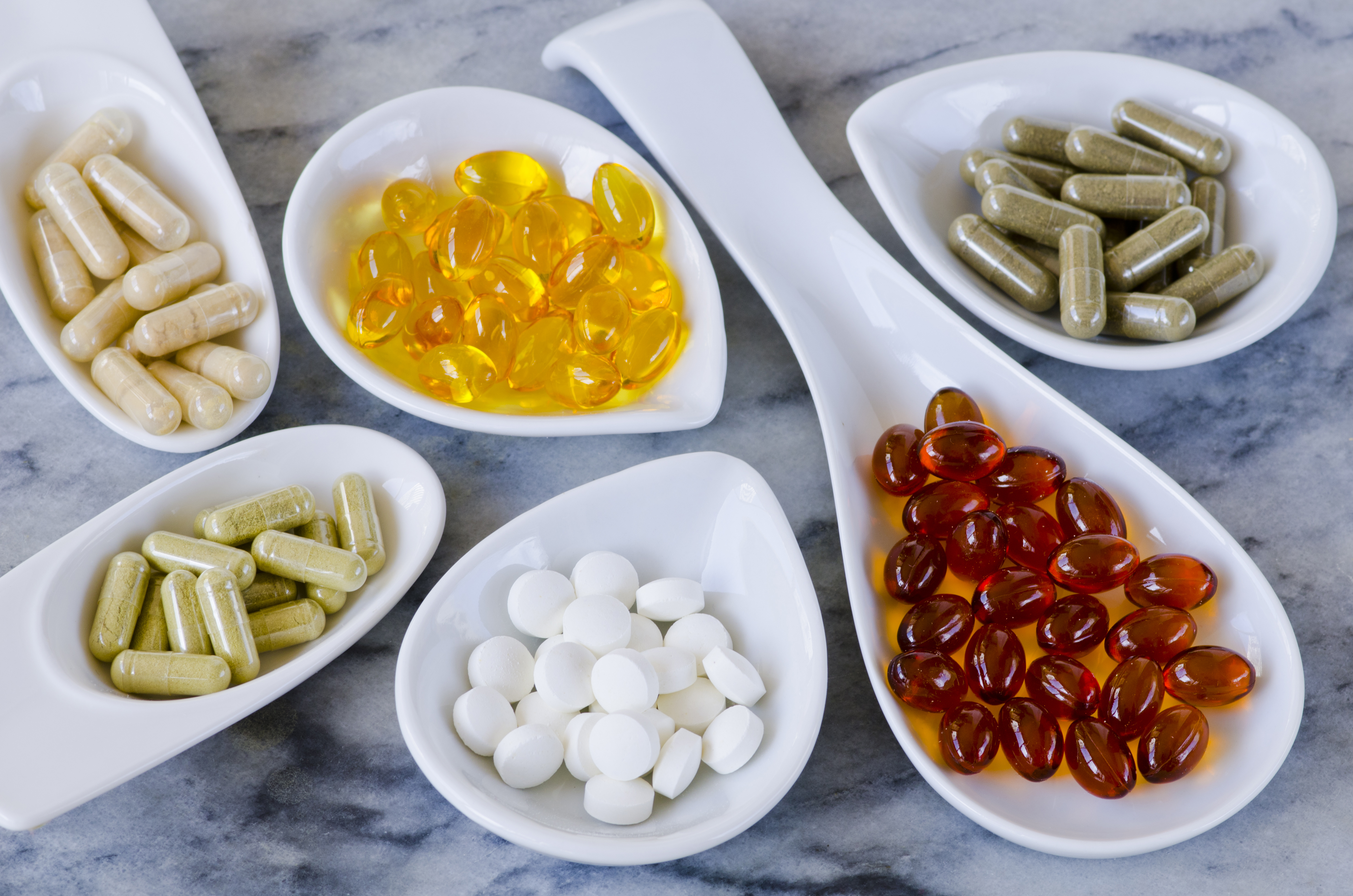
Now that we reviewed features of EDS/HSD related to supplements, it makes sense to ask the question: “will taking supplemental collagen help me?” To answer this question let’s dig a bit further into what is collagen – the 2nd most common substance in the human body (after water).
Collagen is assembled in a triple helix design from the amino acids proline, glycine, lysine, and hydroxyproline. Amino acids are the building blocks of protein. Vitamin C, zinc, copper and manganese act as cofactors for the formation of collagen. Collagen makes up at least 30% of our whole-body protein content and there are currently 28 known different types of collagen that have been identified, with further diversity within each subtype. Collagen from supplements typically comes from animal-derived sources. These include:
- Type I: bovine and fish bones, ligaments, tendons, hides, and skin, eggshells
- Type II: chicken cartilage and joint
- Type III: bovine skin, blood vessels, and internal organs
- Type V and X: eggshells
Different manufacturing processes can affect the structure, composition, and property of collagen produced. The different manufacturing processes can result in the following types of collagen:
- Insoluble undenatured native collagen (maintain triple helix design): Type I and Type II
- Soluble native collagen (maintain triple helix design): Type I and type II
- Gelatin (denatured collagen – no triple helix): Type I and Type II
- Hydrolyzed collagen (peptides and amino acids – no triple helix): Type I and Type II
- Vegan collagen or Vegan collagen builder: plant extracts, amino acids, vitamins, minerals.
Different collagens consumed within the diet are broken down to peptides and then amino acids for absorption. Once absorbed, our bodies genes will decipher what proteins the individual amino acids will be reformed into and where in the body they will go. If a genetic mutation is present that alters the formation and structure of collagen, the body will continue to produce faulty collagen despite the amount of amino acids or collagen supplemented by diet. And although it seems like they may help, there is not yet enough clinical studies to support supplementation of vitamin C, zinc, copper, or manganese to enhance the collagen matrix in EDS and HSD patients.
Collagen supplementation is however being studied in individuals who experience pain or have been diagnosed with osteoarthritis and rheumatoid arthritis. Native collagen Type II has been shown shown to decrease joint discomfort and increase joint mobility when 40 mg/day was consumed potentially by decreasing inflammation in non-osteoporosis individuals. Hydrolyzed collagen may also have chondroprotective effects, which means protecting your cartilage. Additional research is still needed on understanding the underlying pathophysiology of pain and research is needed in the EDS and HSD population to determine if collagen supplementation provides therapeutic symptom relief. Let us know in the comment section below if you have tried collagen supplementation, and if it has helped you.
Author: Lisa Mejia RD/N, LD/N, CDCES, IFNCP
 Like
Like Helpful
 Hug
Hug
 Connect
Hello,
I wanted to emphasize with you on the SI joint pain. I get bouts of that and have found the only thing that helps me is daily stretching. My pirifomus muscles were extremely tight, my SI joints were excruciating and in addition I had pain and tightness in my iliospoas muscles. These all seem to be connected issues and everything was just tightening up. I saw a very good physical therapist who helped me learn stretches to safely loosen this area up. I went from being almost incapable of walking to only having pain on some days. I have never stopped doing the stretches and the pain has stayed manageable. Once I addressed these issues I was able to increase my muscle mass by slowly increasing activity. This may not be possible for you and I’m not implying I know your particular situation but I was so skeptical about physical therapy. I could hardly walk so….how was increasing movement going to help pain? It hurt. But I had been suffering for two years and would have tried anything. Within a few weeks the pain began to decrease and I felt relief like nothing I’ve ever experienced. My thoughts were not consumed with constant, unrelenting and endless pain for the first time in years. If you have not already done so, I recommend asking about physical therapy. If you have already done so, ask again. Not all physical therapist are great at everything. I am still in pain but I was able to increase my body mass (I was 102lbs, I am now 115lbs) by drinking protein shakes and increasing my activity levels over the span of 5 years. I took this slowly, it was hard, it was painful, but I kept at it. Please do not think I am assuming everyone can do this. Some people have things much worse than me. I’m simply sharing how I improved my pain because perhaps there is something that might help for you. I know I appreciated every piece of advice I received as long as it wasn’t judgmental or the person wasn’t pretending they knew exactly what I was experiencing. I know very little about your situation. I simply want to offer what helped me in case that provides you with something that might help you. I hope things improve for you. Mine was so painful and it consumed every waking( and often sleeping) moment. Please keep hope and faith that there will be some relief from your pain. It wears so heavily on the spirit. Best of luck to you.
-
 Like
Like -
 Helpful
 -
 Hug
Hug
8 ReactionsProlotherapy is an excellent fix for overworked ligaments that have become lax. My hypermobile SI joint corrected for a hip operation that left one leg shorter. It took 4 years to find doctors who understood and fixed the pain and gate issues created with prolotherapy. One leg actually always subluxed with a particular leg movement ... ouch! SI Joint movement and ligament damage, as well as prolotherapy's ability to fix ligaments, is not common knowledge around orthopedics.
-
 Like
Like -
 Helpful
 -
 Hug
Hug
1 ReactionI believe collagen has helped me tremendously. As a Tom Boy and longtime tennis athlete and always very flexible, I did not have real EDS issues until my 70's. My unanswered questions and some research led me to take collagen. I am now an old lady with the first fingernails of her lifetime, so I know collagen has done something in my body. I also did not replace my supply right away and have gone downhill rapidly, developing varicose veins that I had during pregnancies years ago, but had been long gone.
-
 Like
Like -
 Helpful
 -
 Hug
Hug
6 ReactionsGreat information! Thank you for sharing!
@anjah
Hi, My name is Julie, I have been suffering terribly for 19 years from Sjögren's .
I was ignored by my doctors
every time I told them about my severe muscle and joint pain. I also felt a terrible
exhaustion that I couldn't
fight. 19 years later I just found out that I have EDS,
with dozens of symptoms.
My doctors just brushed me off, probably because they didn't know what it was. They acted like I was just some hysterical female. One day, my husband brought me some multi source Collagen Powder saying that maybe it would help my pain. At this time, I had had
an auto immune attack in my ears, which took 40% of my hearing in the end. The only thing my team of physicians did was give me huge amounts of antibiotics and steroids. I ended up being unable to leave my room, for a year because of the exhaustion and terrible pain everywhere, joints and muscles. Those drugs are terrible for autoimmune disorders and I literally began to think that I wasn't going to make it. So when my husband brought me the Collagen Powder, I took it right away, twice a day. Within a week, I was up and
getting around my house. It
started helping with the pain, so quickly that I couldn't believe it. After a few weeks, I was able to leave my house and play with my young daughter.
I kept feeling less pain, until it was mostly gone or on bad days, not that bad. I actually stopped taking it bit by bit, and I felt okay. When it does start coming back, I just start taking it again and it gets better. I have told two friends who have rheumatoid arthritis about it, and they won't live without it anymore. We all had very good pain reduction using this Collagen powder. I'm perplexed as to why the there aren't any positive
comments on this site. I hope you find something that helps you feel better too. 🙂
-
 Like
Like -
 Helpful
 -
 Hug
Hug
5 ReactionsLove hearing solutions and reclaiming life!!
Please share the brand and specifically the name of callogen .
I’ve tried many so the specifics would be great!
Stay well!!!
Hello @julierickett and welcome to Mayo Clinic Connect. I appreciate you sharing your experience with Sjögren's. I'm sure you feel relieved to have found something to relieve your pain, especially after 19 years.
You mentioned that an autoimmune disorder attacked your ears. Could you provide more details about what type of ear problem you had? Did it affect your balance or just your hearing?
Back in the late 1970's my mom was dealing with Conic Granulocytic Leukemia. The first time she was on chemo she developed early arthritis symptoms. It was suggested by her Internist that she eat more Jello during chemotherapy treatments as that could help reduce joint issues. So, my mom being a creative cook, came up with super stiff Jello bars. I did observe that it did seem to help her out during additional treatments and helped keep her fingernails from getting thin and soft. The upside for us kids, we got to eat Jello with our fingers instead of a spoon, which we liked a lot. This is how Jello Bars were our tell that mom was going through another Chemo treatment during her 12-year battle. The general observations were that the Jello Bars or Gigglers did reduce my mom’s joint issues during her battle with cancer while on chemotherapy. She used Knox gelatin and Jello Brand products. She liked to add all kinds of fresh fruit to her Jello Bars to keep it interesting......
@aralexisry
I really appreciate your discussion! You are right about people thinking they know what you are going through, being judgmental. You don't come off that way at all. What is most helpful to me is your suggestion about physical therapy. Never a quick fix but a steady practice to help the body heal. Thanks
Good morning. I wanted to send an update, although it's a bit off-topic it may end up helping someone on the list who is struggling to find an answer to the joint and muscle symptoms.
A little history, I started feeling ill in 2009...muscle pain, excessive sweating, fatigue, dizziness, etc. These symptoms have continued despite my Drs best efforts. Univ of Mich after 2 years of follow up felt it could be a mitochondrial issue. I ran a Methylation DNA report which showed genetic variants, so I added nutritional support and have been monitoring that for years. My condition continues to decline. An EMG in Feb 2025 showed no evidence of small fiber or peripheral neuropathy, which had been verified over the years numerous times. That surprised me, not because I was currently having obvious symptoms of "neuropathy" like tingling, numbness etc, but because it had previously been confirmed by a number of sources, including a tissue sample sent to a Cleveland Clinic. So, was my efforts aimed at methylation support working or ???. That got me a referral back to a Univ Clinic for an evaluation. It came back with a diagnosis of peripheral neuropathy...though no new testing was done to verify that anything had changed since the prior negative EMG. I asked to be referred to Genetics. The full gene (exome) sequencing report, which is around 2% of your entire genome and includes only the genes most likely to cause disease, was reviewed and found inconclusive for Hereditary Sensory and Autonomic Dysfunction. That DNA test was supposed to be re-run in 12-18 months. Due to my declining condition...physical disability, heart rate (low 50's) and low O2 (80's)...and the fact that it would be looking at the same limited number of genes, I opted to do whole genome sequencing (WGS includes ALL genes) through one of the online services.
The report came back with a high probability of Early Onset Parkinson's...17 of the 34 genetic variants that were linked to Parkinson's, were specifically linked to the PRKN gene, which is the genetic cause of this slow progressing form of Parkinson's.
Of note, I just learned that high Homocysteine is linked to Parkinson's. One of the first Methylation reports I ran some years ago showed high levels of Homocysteine. (My PCP checked it recently and confirmed that it's now normal.)
The information I've read about Parkinson's is that the disease process impacting your dopamine levels is present for years before symptoms appear. Things like loss of smell, ringing in the ears (tinnitus) and tremors are common, but in EO Parkinson's not always present! (I only get tremors after activity, prolonged stress or cold...then everything tightens up causing tremors and spasms impacting even my core muscles so breathing becomes difficult. I do not have loss of smell, but do have constant ringing in my ears.) Another thing that stood out to me in my research is that approximately 53% of people who present with "frozen shoulder" will go on to develop Parkinson's! Please don't let that number scare you...but if you're dealing with this symptom along with other unexplained muscle/joint issues, treat it as a possible clue. Like most illnesses, the sooner they are recognized and treated the better.
If you feel your Methylation cycle may not be performing well, there is DNA and nutritional testing available and it can be helpful in finding areas that need support. Some of the genes included in Methylation DNA testing are MTHFR, MTRR, MTR, AHCY, PEMT and COMT. Things like methylfolate (not synthetic Folic acid), methylcobalamin (B12), P-5-P (B6), riboflavin (B2), choline, betaine (TMG), magnesium and zinc can be helpful. Your PCP or Holistic Dr can help you monitor things or use nutritional testing from a reliable source online, but be sure to update your Dr(s) on your results. Also pay attention to your GI function...toxins from your GI tract can be harmful to overall health, including your brain.
Links that may help:
https://biologyinsights.com/methylation-disorder-causes-symptoms-and-diagnosis/
https://www.mayoclinic.org/diseases-conditions/inherited-metabolic-disorders/symptoms-causes/syc-20352590
https://www.mayoclinic.org/departments-centers/mitochondrial-disease-clinic/overview/ovc-20567504
https://www.mayoclinic.org/diseases-conditions/parkinsons-disease/symptoms-causes/syc-20376055
https://www.michaeljfox.org/
https://www.walkinlab.com/
https://sequencing.com/
Hope this helps!
All my best,
Deb